
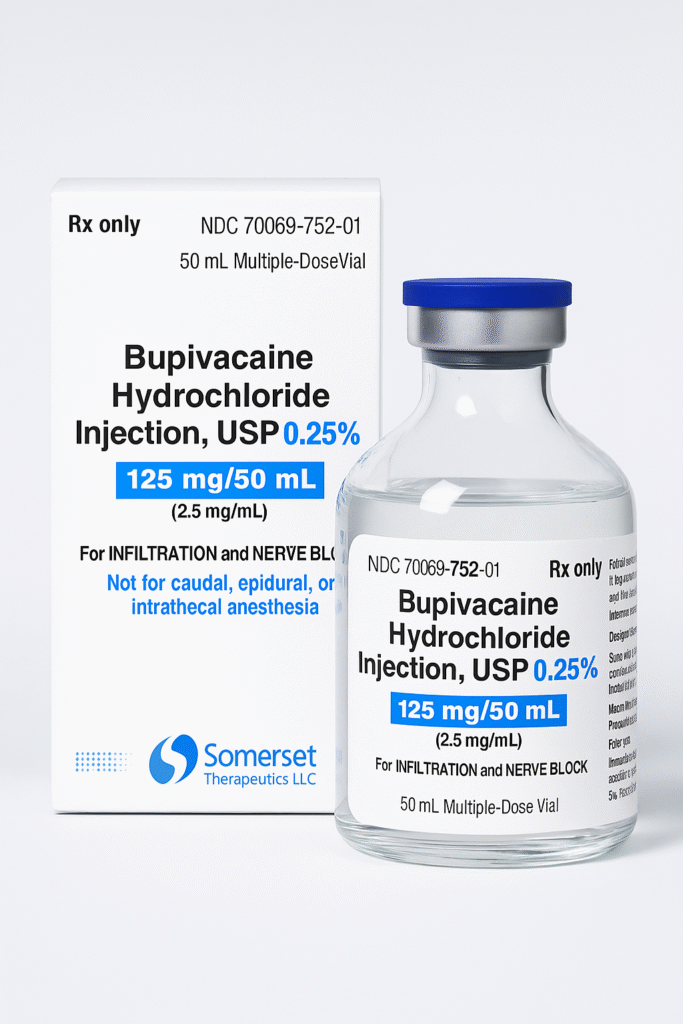
Bupivacaine Injection 0.25%
📘 Description of Bupivacaine Injection 0.25%
Bupivacaine Injection 0.25% is a sterile, non-pyrogenic, aqueous solution of bupivacaine hydrochloride, an amide-type local anesthetic, formulated for local or regional anesthesia. It is intended for injection only and must be administered by a qualified healthcare professional.
📝 Prescription Information
- Generic Name: Bupivacaine Hydrochloride
- Strength: 0.25% solution = 2.5 mg/mL
- Form: Clear, colorless sterile solution for injection
- Route: Infiltration, epidural, caudal, nerve block, or spinal (not IV)
- Packaging: Ampoules or vials (e.g., 10 mL, 20 mL)
- Prescription: Prescription-only medicine (POM)
- Drug Class: Amide-type local anesthetic
💊 Uses
Bupivacaine 0.25% is used for local or regional anesthesia in a wide variety of procedures:
- Infiltration anesthesia – for minor surgical or dental procedures
- Peripheral nerve blocks – e.g., brachial plexus, sciatic nerve
- Epidural anesthesia – for labor, cesarean section, or lower limb surgery
- Caudal anesthesia – commonly in pediatric procedures
- Postoperative pain control – continuous infusion or single-dose blocks
- Field blocks – for procedures like hernia repair or wound suturing
🌿 Nature of Bupivacaine
- Form: Clear, aqueous solution
- Type: Amide local anesthetic
- Onset: Slower (10–20 minutes) compared to lidocaine
- Duration: Long-acting — typically 3 to 8 hours
- Mechanism: Blocks sodium channels → prevents nerve impulse conduction
- pH: 4.0–6.5 (may contain preservatives unless for spinal use)
✅ Advantages
- Long Duration of Action
- Ideal for extended surgical procedures or long-term pain relief.
- Lower Concentration Use
- 0.25% used for infiltration or minor nerve blocks to reduce motor block.
- Versatile
- Suitable for multiple types of regional blocks and infiltrations.
- Reduced Motor Block (at 0.25%)
- Preserves some motor function, making it preferred for labor analgesia.
- Lower Toxicity Risk (vs. Higher Strengths)
- 0.25% concentration reduces chances of systemic toxicity.
⚠️ Precautions
- Cardiotoxicity
- Risk of serious side effects like arrhythmias, cardiac arrest with accidental IV injection — use test dose first.
- CNS Effects
- High doses or intravascular injection may cause seizures, drowsiness, tinnitus, numb tongue, or convulsions.
- Resuscitation Equipment Required
- Must be readily available when administering regional blocks.
- Avoid Intravascular Injection
- Always aspirate before injection; consider test dose with epinephrine.
- Use with Caution in Elderly, Liver Disease, or Heart Conditions
- Pregnancy
- Safe for labor analgesia (especially 0.25% and lower), but dosage should be adjusted.
- Interactions
- Use caution with other local anesthetics or CNS depressants.
📦 Common Packaging
- Vials/Ampoules: 10 mL, 20 mL, 50 mL
- Concentrations: 0.25%, 0.5%, 0.75%
- Preservative-Free Forms: Required for intrathecal (spinal) use
🧪 Storage
- Store below 25°C
- Protect from light
- Do not freeze